Showing posts with label inspiration. Show all posts

Friday, August 24, 2012

Spotlight on Sir Ken Robinson


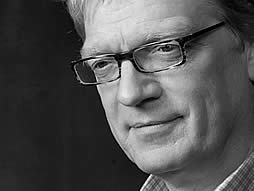
Photo from Robinson's TED Profile

While I think most people in the United States today believe the public education system as it now stands is 'broken,' there is a great disparity in developing a comprehensible definition of the problem and even more inconsistency and confusion in cultivating a plan to ‘fix’ the problem.


Sir Ken Robinson is is an English author, speaker, and international advisor on education in the arts to government, non-profits, education, and arts bodies. His theories on educational reform revolve around placing more importance on the arts, promoting student creativity, and solidly acknowledging and supporting multiple intelligences in instruction and learning.


According to Robinson, the model of the educational system today is utterly out-of-date. Our students are being groomed to be compliant factory workers in a society that no longer supports these types of occupations. As students’ creative minds are educated out of them, we are turning out a stunted workforce of citizens who are unable to think creatively or critically.


This video, from RSA Animate, details Robinson's thoughts on what is wrong with education today.
Changing the paradigm of education today is the first step in meaningful reform.


Robinson is unquestionably a wonderful motivational speaker in the world of education. In this video, recorded at the TED conference in 2010, he discusses moving away from standardized education and developing a personalized curriculum that supports the creation of an environment where children's natural talents can grow and flourish. He advocates, not reform, not evolution, but rather revolution in the world of education.


Ultimately, I find Sir Ken Robinson to be highly motivational and inspirational. He has a way with words and tells some of the greatest anecdotes related to children's education and learning that I have ever heard.

After listening to his speeches and reading many articles he has authored, I am moved to be a part of the solution rather than a part of the problem. I really don't know how anyone in the world of education who considers themselves a progressive thinker could not be influenced by the message this man is sending out.

My only criticism is this - while Robinson is absolutely fantastic at the conveyance of 'big ideas' for educational reformation, or transformation, he doesn't really offer any feasible ideas for making these types of changes a reality. Listening to him provokes a response in those who listen to him, but now what do we do? The wheels of change turn slowly in education. What can we do now to make a difference? What little changes can we make in our classrooms to promote creativity and allow our students to develop their personal talents?

I would like to think I do my part for the cause. I believe stressing cross-curricular integration (especially music and the arts), regularly using kinesthetic activities, and stressing the equal importance of the creative and critical mind to academic success in the classroom are all immediate actions that can be taken to support Robinson's 'big ideas.'

Knowing change is needed and taking steps to facilitate change are two very separate things. Ideas without actions are not worth the air it takes to say them or the time it takes to write them. So, if you believe in the kind of change being called for by Robinson, how exactly do we make that happen?

Monday, August 13, 2012

Just Say No to Textbooks: Alternatives to Feeding the Textbook Monopoly

I loathe textbooks. I detest and despise them. Textbooks are bland and boring, and they read like a set of stereo instructions. They suck the joy out of learning and teaching. When I look at a textbook, I can almost hear the monotone droning of a lecture that will without a doubt put me to sleep. Literature textbooks are the worst! Full of excerpts (blech!) and poetry/short stories that are either unknown or uninspiring or both. They are edited to within an inch of their existence. Quite frankly, they suck.

When I entered my first classroom and took inventory of the text choices I had inherited, I was less than enthusiastic. I found very few trade books (which I actually love), two sets of literature text books, and a set of grammar texts from the 1980’s. What could be worse, you might ask. Well, there were also not enough of any of these books for each student to have one. So even if I had wanted to use them, my students wouldn’t be able to reference them outside of the classroom because there was only one set to be shared between four classes.

The fact is, it is extremely difficult to build excitement in your students, if you are bored with and disengaged from your own class materials. So, I immediately made the decision to chuck the texts and create my own. Working in Word, I compiled materials, complete with illustrations, and put together my own texts. I also made enough copies that all my students had their own to use wherever and whenever they chose. 

Over the course of a few weeks, I worked at night and over weekends to put together a poetry anthology and a short story anthology for my sophomores and a series of mythology anthologies for my seniors, including Norse, Egyptian, Arthurian, and Modern Myth and Legend.


While the process is a little time-consuming, I assure you it is well worth the effort involved. The materials you create will be more interesting to both you and your students.

Although you can put these materials together with no more than MS Word and Internet access, there are lots of great options available that both teachers and students can use to create digital texts, if you know where to look. This is definitely a case of "I wish I knew then what I know now." So, please learn from my ignorance and check out some of these fantastic resources.


Resources for Creating, Curating, and Sharing Digital Textbooks


1. ePub in Classroom - The ePub format has become an industry standard for ebooks. You can easily create ePub books with your students or you can create units and entire textbooks for use with your courses. These resources will help you formulate your ePub format resources.

2. ck-12 - Books available through this site are customizable. You can rearrange the chapters or even add, remove and edit content. Add bite-sized lessons to FlexBooks or assign to students for independent learning. Videos and multimedia simulations bring learning to life. Enable students to track their progress with instant feedback. Get assessments, answer keys and ideas for differentiated instruction.

3. Project Gutenberg - Offers over 40,000 free ebooks: choose among free epub books, free kindle books, download them or read them online. Perfect resource for creating anthologies.

4. Apple iBook Author - Available free on the Mac App Store. Allows for the use of galleries, video, interactive diagrams, 3D objects, and more.

5. LiveBinders - Free service for collecting, organizing, and presenting all manner of resources, including web pages, pdf files, graphics, and videos. I wish I had known about this site when I built my units last year! If you are wondering just how you could use this tool, check out this example for an Edgar Allan Poe unit or this one for Web 2.0 for Secondary Teachers. You can discover a wealth of information looking through other's binders and then synthesize them into your own.

6.  Open Culture - 500 Free Online Courses from Top Universities, including some of the best free cultural and educational media available on the web.

7. Cybrary Man's Educational Websites - Created and curated by Jerry Blumengarten and including links for all grade levels and subject areas.

8. National Repository of Online Courses - Includes coursework for high school foundations, AP content, and college foundations.

9. moodle - Free web application that allows educators to create online learning sites, AKA Virtual Learning Environments (VLEs).

10. Pinterest - An excellent content sharing site in which members "pin" images and videos to boards they create themselves. This site is quickly becoming a very valuable collecting tool for educators. It also offers a quickly growing community of "pinners." Here are 16 Ways Educators Use Pinterest from Stephanie Buck, just to give you some ideas.

With all these great ideas, the wheels are definitely turning! I am currently working on two non-fiction anthologies, an American Folklore compilation, and two thematic short story collections. I believe these resources may be just the thing to update my previous collections and move my current projects to the next level.

So, if you are disenfranchised with the materials you have available, do yourself and your students a favor and check out some of these alternatives. I promise no one will be disappointed.

Wednesday, August 8, 2012

5 Resources for Integrating Music Across the Curriculum

Why Should I Use Music in My Classroom?

"We know an age more vividly through its music than through its historians."
~ Rosanne Ambrose-Brown

I have never met anyone whose life has not been influenced by music in some way. Music sets the stage for our lives; it has the ability to trigger memories and manipulate moods. Music can stimulate our creativity and increase the connections in our neural network.

Those of us who grew up with School House Rock can attest to the power of music to infiltrate the memory whether you want it to or not. I dare you not to finish this: “Conjunction Junction . . .” How about this one: “I’m just a Bill. . .”

If for some reason you have never heard of School House Rock or if you just want to take a trip down memory lane, here is a video for your viewing pleasure.


The truth is, using music in the classroom can impact student learning in a number of ways. Music can be used to:

  • create a positive learning environment
  • establish the necessary mood or atmosphere
  • re-energize tedious learning activities (like review, vocabulary, and drills)
  • focus attention and improve memory retention
  • facilitate multi-sensory learning and address multiple intelligences
  • provide inspiration, motivation, and creative fuel for imagination
  •  build rapport between students and teachers and among the students themselves


When a child learns by experience that music forges direct links between self and world, self-expression becomes more fluent; the music helps interpret "who I am." - Growing up Complete, the report of the National Commision on Music Education, 1990


Five Resources for Music Integration

  1. The Rock and Roll Hall of Fame - currently houses 52 lesson plans using rock and roll to teach History, English Language and Literature, Economics,Social Science, Psychology, and Government.
  2. Science in School - "Using music in the science classroom" by Caroline Molyneux - extremely interesting article from science teacher Caroline Molyneux outlining her strategy of using music in her classroom to begin class and to facilitate memory retention in her students. 
  3. Flocabulary - Educational Hip-Hop - subscription resource with videos covering English (both literature and vocabulary), math, science, social studies, and current events. Individual teacher rate is $5-7/month (depending on whether or not you want the current event videos each week) or $63/year (get 3 months free). They also offer free videos on their site and on YouTube as well, including this one for Macbeth that I used with my sophomores.


4.  "Interactive Music Strategies for the Academic Curriculum" by Michelle Lazar - Practical ideas for integrating music into the curriculum.

5. EdApps.ca - "14 Ways to Use GarageBand in the Classroom" - Uses include ways to increase technology in music classes, as well as physical education and across the humanities.