Showing posts with label the big picture. Show all posts

Wednesday, August 29, 2012

Practical Skills: What Should We Be Teaching Our Students Today?


Over the years, I have had many spirited discussions with a wide variety of professionals working in and around the field of education debating the purpose of the public education system. What are our ultimate goals of achievement for our students?

I believe the main objective of education is to help prepare students to survive and thrive in the world beyond academia. I support the integration of practical skills in secondary education over the continuation of solely academic pursuits.


Unfortunately, no matter how much we push, prod, and cajole, no matter how much we extol the virtues of seeking an education beyond high school,  approximately 7,000 students drop out of high school every day. Nationally, 75.5% do manage to graduate, but only about 68.3% of these students go on to enroll in college.

For those who see secondary education as a preparation period for students' continuing education, what exactly are we doing for the approximately 31.7% of our students who either do not graduate or do not go on to attend college, but enter the workforce instead?

In 2011, there were 15.9 million people, ages 16 to 24, who were not enrolled in school. They were out in the world working or looking for work.  Even those who attend college are going to have to seek employment. either during college (38.8% of full-time college students also work) or after.

The fact is that in our society today no one knows what the future is going to look like. As educators, we are currently trying to prepare our students for a world (and a job market) that does not yet exist. According to Meghan Casserly's article at Forbes, here are 10 jobs that didn't exist 10 years ago:

  • App Developer
  • Market Research Data Miner
  • Educational/Admissions Consultant
  • Millennial Generational Expert
  • Social Media Manager
  • Chief Listening Officer
  • Elder Care
  • Sustainability Expert
  • User Experience Design
  • Cloud Computing Services

According to the 2012 Job Outlook Report from the National Association of Colleges and Employers, employers today are looking for:

  1. Ability to work in a team - 79.8%
  2. Leadership - 77.2%
  3. Communication skills (written) - 75.6%
  4. Problem-solving skill- 74.1%
  5. Strong work ethic - 73.1%
  6. Analytical/quantitative skills - 72.0%
  7. Communication skills (verbal) - 67.4%
  8. Initiative - 65.3%
  9. Technical skills - 61.1%
  10. Detail-oriented - 57.5%
  11. Flexibility/adaptability- 56.0%
  12. Computer skills - 55.4%
  13. Interpersonal skills (relates well to others) - 54.9%
  14. Organizational ability- 50.8%
  15. Strategic planning skill- 29.0%
  16. Friendly/outgoing personality - 29.0%
  17. Creativity - 22.3%
  18. Entrepreneurial skills/risk-taker - 21.8%
  19. Tactfulness - 21.2%
This is a lot of information to consider, but it seems to me that a systematic and concentrated integration of practical skills education would be the place to begin educational reform.


Technology

 
First, when looking at both the list of new jobs and the skills employers are looking for, technology obviously plays a huge role. From what I've seen in the majority of high school technology programs, they need to be improved. Kids today know all about playing with technology, often better than the teacher - my students have taught me many tricks. However, if all we are allowing them to do is play with it in school, then they really aren't learning much. Students need to be given practical assignments to show off their skills, learn new ones, and realize that technology can be far more than play.
 
Not to say that there are not exceptional teachers in the field of technology or those that integrate technology in practical ways, but as a whole, technology applications need to be made more practical. Additionally, I strongly believe that all schools should require compulsory technology training as part of their Professional Development Plans every year for all teachers.
 
How can we possibly teach kids about technology, if we do not have the skills ourselves? Also, an added benefit would be teachers who actually use the technology available to them in their classrooms. I cannot count the number of classrooms I have been in that are equipped with SMART boards that are NEVER used - what a waste of money and resources!
 

Practical Work Opportunities

 
The majority of students who drop out do so because either they see no life value in what the are receiving from their educations or they believe they would be better off working or they have to work to help support themselves and/or their families. Why not take advantage of the government monies available for training (it is out there) and involve the larger community by partnering up and offering students the opportunity to apply for paid internships with local businesses?   
 
Additionally, students in high school should all be required to take a personal finance/life skills class, and it should be as realistic as possible. Students should be taught to manage a budget and balance a checkbook using information from the real world such as average pay, rental prices, gas prices, etc. from they area in which they actually live. They should be taught how to write resumes and fill out job applications. They should be exposed to tax forms and learn how to read them. They should be exposed to paycheck stubs and learn how to interpret them. These are all practical skills that everyone is going to use eventually. When they are tailored to a specific area and to a particular student, they can be invaluable and, best of all, applicable to his/her life.
 

Team Building and Teamwork

 
Notice the top two attributes employers today are searching for: ability to work in a team and leadership. Team building and group work should be used on a regular basis across the curriculum. In real life situations, your students are not going to be working all by themselves exclusively. Dealing with group dynamics (both the good and the bad aspects) is a skill that must be learned. How to work effectively in groups is a skill that must be learned. Helping facilitate this learning is the responsibility of each and every educator.
 
Schools and teachers should also always be looking for opportunities to generate leadership roles and spread them out among the school population. Working in groups and teams can help provide these roles. I also support the use of community service projects and volunteerism to foster leadership skills, teamwork skills, and a number of other skills which I will discuss further at another time. Participation in sports, clubs, and organizations also offer the chance to work on leadership and teamwork. I believe teachers, sponsors, and coaches should use these opportunities to allow members to take on responsibility for and leadership of various tasks to help the greatest number of students.


Overall, I strongly believe the integration of practical skills education has the potential to both encourage and retain disenfranchised students, while also offering all our students (college-bound or not) authentic abilities applicable to their worlds beyond academia. So, if we are going to discuss educational reform, this seems like the most logical place to begin.


Friday, August 24, 2012

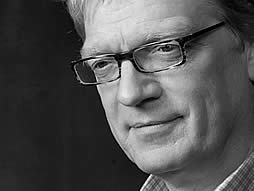
Spotlight on Sir Ken Robinson


Photo from Robinson's TED Profile

While I think most people in the United States today believe the public education system as it now stands is 'broken,' there is a great disparity in developing a comprehensible definition of the problem and even more inconsistency and confusion in cultivating a plan to ‘fix’ the problem.


Sir Ken Robinson is is an English author, speaker, and international advisor on education in the arts to government, non-profits, education, and arts bodies. His theories on educational reform revolve around placing more importance on the arts, promoting student creativity, and solidly acknowledging and supporting multiple intelligences in instruction and learning.


According to Robinson, the model of the educational system today is utterly out-of-date. Our students are being groomed to be compliant factory workers in a society that no longer supports these types of occupations. As students’ creative minds are educated out of them, we are turning out a stunted workforce of citizens who are unable to think creatively or critically.


This video, from RSA Animate, details Robinson's thoughts on what is wrong with education today.
Changing the paradigm of education today is the first step in meaningful reform.


Robinson is unquestionably a wonderful motivational speaker in the world of education. In this video, recorded at the TED conference in 2010, he discusses moving away from standardized education and developing a personalized curriculum that supports the creation of an environment where children's natural talents can grow and flourish. He advocates, not reform, not evolution, but rather revolution in the world of education.


Ultimately, I find Sir Ken Robinson to be highly motivational and inspirational. He has a way with words and tells some of the greatest anecdotes related to children's education and learning that I have ever heard.

After listening to his speeches and reading many articles he has authored, I am moved to be a part of the solution rather than a part of the problem. I really don't know how anyone in the world of education who considers themselves a progressive thinker could not be influenced by the message this man is sending out.

My only criticism is this - while Robinson is absolutely fantastic at the conveyance of 'big ideas' for educational reformation, or transformation, he doesn't really offer any feasible ideas for making these types of changes a reality. Listening to him provokes a response in those who listen to him, but now what do we do? The wheels of change turn slowly in education. What can we do now to make a difference? What little changes can we make in our classrooms to promote creativity and allow our students to develop their personal talents?

I would like to think I do my part for the cause. I believe stressing cross-curricular integration (especially music and the arts), regularly using kinesthetic activities, and stressing the equal importance of the creative and critical mind to academic success in the classroom are all immediate actions that can be taken to support Robinson's 'big ideas.'

Knowing change is needed and taking steps to facilitate change are two very separate things. Ideas without actions are not worth the air it takes to say them or the time it takes to write them. So, if you believe in the kind of change being called for by Robinson, how exactly do we make that happen?

Tuesday, August 7, 2012

Take Control of What You Can

Educational Philosophy

Let's Begin at the Beginning

An educational philosophy is a very personal thing. It is influenced by beliefs, ideals, and life experiences. A strong philosophy provides a solid direction in pursuing one's place within the field of education. It helps maintain a center when the day-to-day grind tries to wear you down. It offers a tangible touchstone to remind you why you chose to enter the world of education in the first place.

I believe that many educators compose their philosophies during their pre-service years filled with hope, passion, and idealism. Unfortunately, after a few years, many have forgotten these feelings. The truth behind the bureaucracy of the system, the pressure to achieve high test scores above all else, and the battle against poor public perception simply erodes their beliefs and ideals.

According to an article by Claudia Graziano on edutopia, "Every year, U.S. schools hire more than 200,000 new teachers for that first day of class. By the time summer rolls around, at least 22,000 have quit. Even those who make it beyond the trying first year aren't likely to stay long: about 30 percent of new teachers flee the profession after just three years, and more than 45 percent leave after five."
Credit Mark Wagoner
I would say this proves that the bloom is definitely off the rose. Now I'm not saying that I believe anyone can be a teacher because I don't; but when nearly half of the people entering a profession are searching out a new career within five years, I have to believe that there is a major problem somewhere in the system.

Now, we can argue about what is causing this crisis in teacher retention from now until the end of time. Teachers are under-paid and over-worked. They are disrespected, blamed for everything by everyone, and expected to work miracles in classes that are too large with little support, poor resources, and few materials. These are all valid points; however, short of massive reform and a miraculous change in funding and public opinion, these are things that will not change overnight, if at all. Is it tragic? Yes, of course it is, but why spend time and energy lamenting situations that we have no control over? And before I get jumped all over, I am not advocating we give up on working for change in education. In fact, I believe it is the duty of every educator to stand up and do everything in their power to influence those in power to reform our system of education and to put our students first for a change.

What I am saying is this - when we begin to feel that we have no power left, we should remember that we always have power over ourselves, our attitudes, and our beliefs.

This is where our personal educational philosophies come in. While being an idealist can lead to great disappointment when the reality doesn't match the dream, I believe that keeping a certain amount of idealism alive is necessary to successfully remaining an effective educator. So, go dig out your philosophy, remember why you chose the field, re-energize your psyche, and get out there and keep trying to change lives!

My Personal Philosophy of Education

Here is my own personal educational philosophy. I keep it handy because reading it does help me focus on the big picture and exactly where my values lie.


I believe education should be focused on the needs of the child above all else. Therefore, John Dewey’s educational philosophies of progressivism and pragmatism have had the biggest effect in the construction of my personal educational philosophy. Dewey’s The Child and the Curriculum has been particularly influential. Learning should place active participation in the highest regard. Human beings are social creatures by nature and I feel that interaction between my students and me, as well as each other, will foster creativity and a true passion for learning. In turn, this will provide a foundation for life-long intellectual, as well as moral, growth in my students. All students are unique individuals with inner strength and various talents. It is my privilege to be involved in their lives and to help provide them opportunities, challenges and encouragement to help them release those qualities and nurture them on their way to becoming intelligent, well-spoken, productive citizens of the world. I want to prepare my students not only for further academic success, but also to make informed decisions about all that life has to offer them in a way that best serves their individual interests. Using a wide range of learning resources and a flexible curriculum, I want to encourage my students to learn both independently and in a group dynamic setting, focusing on collaborative class projects, as well as independent study projects. I want them to develop their own beliefs and convictions and also understand the importance of respecting others beliefs especially when they differ from their own. I plan to have a democratic classroom by having multiple projects integrated into my lesson plans to enable flexibility and the opportunity for students to choose between lessons based on what is of interest to them. I will maintain a strong emphasis on critical thinking and problem solving. We will not only discuss lessons, but gain a deeper understanding of the concepts through role-playing exercises, individual reflection writing and group projects. In my classroom I want each person to feel respected and valued. I want them to learn to form relationships governed by honesty and respect. I want to instill a sense of community in my classroom and an understanding of the rights and needs of others. Creating opportunities for moral and social growth will allow the students to develop self-discipline and self-control.

My greatest hope for all of my students would be for them to grow into respectful, empathetic adults with the intellectual capabilities to live a fulfilled life and to affect powerful, positive social changes to the world around them. Any role I can play through educating and mentoring these young adults will truly be my greatest reward.

Is this idealistic? Perhaps. Overly simplistic? Maybe. Measurable through data? Not really. Aligned with the standards? Nope. The evidence of success is purely anecdotal, but I know it when I see it and that is why I got into education in the first place.