Showing posts with label creativity. Show all posts

Thursday, July 31, 2014

Poetry and the Common Core: The Great Non-Debate

Wordle: Poetry and the Common Core
It has been awhile. Teaching, grad school, working on my novel, and submitting my children's book for publication have made for one extremely busy year! I wanted to come back with a topic that is very near and dear to my heart - the teaching of poetry. 
It seems poetry has become somewhat of an endangered species lately due to the adoption of the Common Core State Standards, but the fact is that nothing could be further from the truth. One thing I have learned about standards is this - they are most definitely in the eye of the interpreter.
My Story

The poet, John Ciardi, wrote, “The concern [for poetry] is not to arrive at a definition and to close the book, but to arrive at an experience” (2). When I consider all the units I teach each year, poetry is the one experience I look forward to the most. I first work to uncover my less enthusiastic students’ reasons for their apparent aversion to poetry, stressing to them that poetry is not about the destination; it is about the journey. Poetry explains, investigates, observes, and illustrates life with its beautiful economy of language and though a poem may be sparse with its words, it is exponentially substantial in its meaning and message. Poetry is about how it makes you feel, what it allows you to see, and where it allows you to travel. Poetry is the art of language, and as such, its study is crucial in developing a well-rounded education for our students. It is quite unfortunate that this critical component for teaching English Language Arts is in danger of being exiled from our curriculum simply due to a blatant misinterpretation of the Common Core State Standards.
The introduction of National Poetry Month in 1996 provided teachers a sanctioned time and place to celebrate all that poetry has to offer. Each April, ELA classrooms everywhere immersed themselves in the world of poetry – reading it, writing it, examining it, performing it, experiencing it. However, as standardization in public education reaches a new level with the introduction and incorporation of the Common Core State Standards (CCSS), teachers everywhere are finding themselves embroiled in a curricular conversation regarding the future of poetry in our public school classrooms. The fact that poetry is not specifically mentioned in the Common Core State Standards along with the increased concentration on literary nonfiction and informational texts has led some teachers and administrators to conclude that the study and writing of poetry has an uncertain future in our ELA classrooms. Yet, if we take a closer look at the “new and improved” standards we are working to implement, poetry definitely has a place and a purpose in our classrooms.
The goal of CCSS is to increase the academic rigor of our curricula through increasing our text complexity, focusing on critical thinking and analysis skills, diversifying content through the addition of more literary nonfiction and informational texts, and concentrating on building and refining academic vocabulary and answering text-dependent questions (Common Core State Standards Initiative). The Common Core doesn’t give educators a prescribed reading list, but it does offer exemplar texts by grade level in the ELA Appendix B, along with sample performance tasks related to the exemplars. These lists are meant as a guide to assist educators in choosing complex texts for all students and crafting appropriate performance tasks that meet the standards. Every grade level list contains poetry and performance tasks associated with poetry. With the inclusion of poetry in Appendix B, the discussion on whether or not to include poetry in our classrooms should not be a matter for debate.
Furthermore, if we take the time to look at the Common Core’s ELA Appendix A, a cursory examination of the definitions of the writing standard’s three text types offers this addendum: “The narrative category does not include all of the possible forms of creative writing, such as many types of poetry. The Standards leave the inclusion and evaluation of such forms to teacher discretion” (23). Here is where it seems the crux of the current dispute lies – “teacher discretion.” The Common Core places more emphasis on literary nonfiction and informational text in its literature standards, and the writing standards advocate for more argumentative writing than narrative (particularly at the upper grade-levels). This, coupled with the current trend of using students’ test scores to evaluate teachers’ effectiveness, has created an atmosphere in which some educators are concerned about making curriculum choices they fear may not align with the standards or may fail to prepare their students for testing. Quite frankly, it has many teachers questioning their own judgment when choosing materials for their students; and for those who may not be comfortable or committed to poetry, the lack of definitive support for reading and writing poetry in the Common Core provides an easy route for removing material they find personally problematic. The implementation of poetry in the classroom is simply a matter of aligning student outcomes and performance tasks to meet the current standards.
In Michael Benton’s The Importance of Poetry in Children’s Learning, he asserts, “good poems are places where writers and readers exercise both an intelligence of thinking and an intelligence of feeling” (6). Moreover, poetry is a prime source of stories that leaves readers spellbound, allows them to reexamine the familiar through a fresh perspective, records and transmits culture, and assists in the mastery of language (Benton, 4-5). If one requires further justification for the inclusion of poetry in the classroom, there are wonderful organizations dedicated to reading, writing, and performing poetry that have worked with aligning poetry to the Common Core. Poetry Out Loud, the Poetry Foundation, and Poets.org offer teachers resources for aligning poetry to the standards, so do a great number of state education boards and universities from around the country. The information is readily available and free for the taking.
While others may continue to debate whether or not we can take the time to teach poetry to our students and just how this unique genre of writing fits in with the standards, it is a non-issue in my eyes. There is no question that I will continue to teach poetry with all the passion and excitement I bring to the table every year and using what I affectionately refer to as the “Billy Collins Approach,” asking “them to take a poem / and hold it up to the light / like a color slide” and refusing to “tie the poem to a chair with rope / and torture a confession out of it.” I could continue on for pages and pages explaining the benefits of poetry to our students and reasoning out how working with poetry can align with each anchor standard present in the Common Core, but there are plenty of others out there who have done just that. Instead, I would like to share my own experiences gained while working with poetry and students.
Each time I teach a poetry unit, regardless of whether I am working with freshmen or seniors or the classes in between, we create a capstone project at the end of the unit – an audio/visual poetry interpretation. The project evolves each time I use it, and I am sure it will continue to grow and change as I move forward with my students. I ask my students to choose a poem that speaks to them on a personal level and create a five to ten minute presentation using images and music to explain their personal connection with the verse. Students used either PowerPoint or Prezzi to create their presentations in the beginning but are now also using programs such as Movie Maker or iMovie. The only parameters I enforce are images and lyrics must be school-appropriate, other than that, anything goes. I encourage my students to consider what makes the poem important to them, how do they relate to the imagery, the tone, the message of the poem. I push them to move beyond the simple task of telling me about the poem to embrace the complexity of telling me about their relationship with the poem and sharing it with both their peers and me.
Every time I do this project, I watch my kids attack the challenge full force, and I am consistently impressed with the results of their efforts. Through this project, I have seen some truly extraordinary work. P.J. fashioned an insightful commentary on the human destruction of natural resources using e.e. cummings’ “Humanity I Love You.” R.S. and M.T. utilized Gwendolyn Brooks’ “We Real Cool” as a springboard for discussing the effects of gang activity on their neighborhood. A.N. fostered a conversation about public versus private personae employing Emily Bronte’s “She Dried Her Tears.” T.W. explored gay rights and the lives of LGBTQ teens with her interpretation of Lyla Cicero’s “Love is for Everyone,” complete with interactive activities aimed at increasing the knowledge and understanding of her peers on these issues. Marge Piercy’s “Barbie Doll” is a classroom favorite, inspiring projects addressing topics such as feminine stereotypes, bullying, and our cultural obsession with plastic surgery and perfection. Finally, another seminal student choice, Mary Elizabeth Frye’s moving epitaph “Do Not Stand At My Grave And Weep” has inspired students to design poignant tributes and memorials to loved ones lost. A.B. chose to write and compose an original song to honor the memory of a friend lost to drug abuse. B.W. and K.C. celebrated the lives of their fathers and mourned their passing. N.G. paid tribute to a friend lost only months prior to our project in a car accident; her emotions, still open and raw, were readily apparent in her work. The passion, the intelligence, the bravery exhibited by my students in completing these projects is why I love poetry and why I will continue to teach it.

As I stated in the beginning, poetry is not about making it to the end with all the correct answers but rather how we navigate and what we discover along the way. It would be a travesty to deny our students the possibilities afforded them through the study of poetry. They will miss the chance to understand the nuance of language and to explore figurative language at its very best (CCSS Language Anchor 5). They will lose the option of using poetry to discover technical, connotative, and figurative meanings of language, all within the same lines of verse and to determine the effect of word choice on tone and meaning using the most concise application of language possible (CCSS Reading Anchor 4). They will be denied an important technique for creating well-structured narratives filled with carefully considered details (CCSS Writing Anchor 3). Most importantly, they will miss the opportunities poetry offers not only for cultural and personal association, but also for emotional connection and catharsis. I will always teach poetry to my students because they deserve the chance to experience it.

Resources to Help You Meet Common Core Using Poetry

  • Poetry Out Loud - A personal favorite of mine. Poetry Out Loud now offers CCSS alignment complete with a downloadable Teacher's Guide, links to Teacher Resources and Preparation, Lesson Plans and Class Scheduling, and Accessibility. If you haven't checked out this program, I highly recommend you do so - IMMEDIATELY. If you have any doubt, take a look at these students competing in the Poetry Out Loud recitation competition: 


  • Teaching Channel is a great source of inspiration and ideas. The video I chose to link to not only meets CCSS, but also showcases a very innovative way to approach poetry in an unusual pre-reading exercise.
  • Poets.org presents educators with an interesting plan submitted by Madeline Fuchs-Holzer for grades 9-12 that approaches the study of poetry through its use in film. Crossing media boundaries, these lesson plans address reading, writing, and listening and speaking CCSS. The site also has a plethora of Common Core aligned poetry lessons and workshops that are both engaging and original.
  • Feeling overwhelmed or uncomfortable with the prospect of teaching poetry? Ben Curran at Education Week  offers a great article about aligning poetry to the Common Core that is easy to follow and understand for educators who may be hesitant about how poetry fits into the world of CCSS.
  • In much the same vein, EDSITEment!  uses poetry exemplars, CCSS, lesson plans, and multimedia resources to provide educators with both the means and the way to meet Common Core Standards through poetry with ideas for all grade levels K-12.
  • Looking for exemplars that meet the requirements for Common Core? The Poetry Foundation has assembled all the exemplars from the CCSS for ELA: Appendix B for all grade levels K-12 in one place.
  • Finally, while I am not a huge fan of text books, this offering from Heinneman is pretty useful (and best of all, FREE). Written for teachers in the middle grades, it is a fine resource for breaking down the CCSS and seeing exactly how each one fits into the study of poetry. It also uses a decent selection of poetry to show the literary devices featured in each one, touches on poetry annotation, and provides activities for pre-, during, and post-reading that could easily be applied to any poem at any grade level.

Tuesday, September 4, 2012

10 Resources for Integrating Art Across the Curriculum


Sadly, fine arts classes are continually being cut in public education today. These classes are seen as a frivolous waste of time and resources in a system ruled by standardized testing. If it is not on the test, then it has no real educational value, right? WRONG! The use of fine arts across the core curriculum (in both example and creation)  actually benefits students in a number of ways. Some of these include: 
1. Responding to art can be very stimulating and can lead onto a great variety of activities.

2. Using of art provides a useful change of pace.


3. Incorporating of art into the class or syllabus can take the students out of the classroom and encourage them to use their language skills in the real world.


4. Creating of art or even thinking about art can be very motivating. Especially for students who may struggle with read and respond activities. It can help put more emphasis on the ability to clearly express thoughts and ideas with skills other than writing or speaking.

5. Responding to and creating art has the potential to develop students’ creative and critical thinking skills.

6. Using of fine arts in the classroom offers students another level of connection to class materials (i.e. visual, auditory, kinesthetic).

Resources

Here are some of the many resources available to educators wishing to integrate art into their curriculum.

Crayola.com - Lesson plans for PK-12

Scholastic.com - Strategies for Arts Integration PK-12

The Walters Art Museum -  resources using visual arts to teach concepts of social studies, science, language arts and math curricula. Designed for middle school students but adaptable for elementary and high school, all content including the printable lessons and flash interactives align with the Maryland State Curriculum. Ideal for visual arts teachers who want to integrate the arts into other disciplines or for non-arts teachers who want to venture into the world of art. Activities can be assigned as homework or in-class assignments.
Note: These resources require both Adobe Flash and Reader.

Arts Every Day - Steps for creating an arts integration school. Extremely interesting site, if you are looking for ways to change curriculum.

Arts Partners - Based in Dallas, this organization offers not only resources, but professional development for arts integration as well.

Education Closet - Arts Integration Links and Resources

ARTSEDGE -  The National Arts and Education Network – supports the placement of the arts at the center of the curriculum and advocates creative use of technology to enhance the K-12 educational experience. ARTSEDGE empowers educators to teach in, through and about the arts by providing the tools to develop interdisciplinary curricula that fully integrate the arts with other academic subjects. ARTSEDGE offers free, standards-based teaching materials for use in and out of the classroom, as well as professional development resources, student materials, and guidelines for arts-based instruction and assessment. A program of the John F. Kennedy Center for the Performing Arts.

Artswork at ASU - Integrated Arts Lesson Plans for Elementary and Middle School Students

Edutopia on Pinterest - Edutopia's Arts Integration Board on Pinterest - excellent resources on arts integration and why it is so important.

National Gallery of Art - Contains NGA Classroom: Online Resources for Teachers and Students;
NGA Loan Programs: Teaching Packets, DVDS, Videos, and Other Media; and NGA kids

Hopefully, these resources will assist you on your own journey to integrate the arts into your own classroom. If you are still not convinced, I would like you to consider this quote from Paul Ostergard the Vice President of Citicorp: "A broad education in the arts helps give children a better understanding of their world. . .We need students who are culturally literate as well as math and science literate." Well said sir, well said.

Friday, August 24, 2012

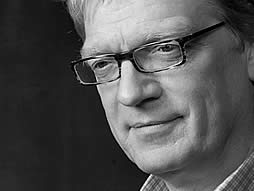
Spotlight on Sir Ken Robinson


Photo from Robinson's TED Profile

While I think most people in the United States today believe the public education system as it now stands is 'broken,' there is a great disparity in developing a comprehensible definition of the problem and even more inconsistency and confusion in cultivating a plan to ‘fix’ the problem.


Sir Ken Robinson is is an English author, speaker, and international advisor on education in the arts to government, non-profits, education, and arts bodies. His theories on educational reform revolve around placing more importance on the arts, promoting student creativity, and solidly acknowledging and supporting multiple intelligences in instruction and learning.


According to Robinson, the model of the educational system today is utterly out-of-date. Our students are being groomed to be compliant factory workers in a society that no longer supports these types of occupations. As students’ creative minds are educated out of them, we are turning out a stunted workforce of citizens who are unable to think creatively or critically.


This video, from RSA Animate, details Robinson's thoughts on what is wrong with education today.
Changing the paradigm of education today is the first step in meaningful reform.


Robinson is unquestionably a wonderful motivational speaker in the world of education. In this video, recorded at the TED conference in 2010, he discusses moving away from standardized education and developing a personalized curriculum that supports the creation of an environment where children's natural talents can grow and flourish. He advocates, not reform, not evolution, but rather revolution in the world of education.


Ultimately, I find Sir Ken Robinson to be highly motivational and inspirational. He has a way with words and tells some of the greatest anecdotes related to children's education and learning that I have ever heard.

After listening to his speeches and reading many articles he has authored, I am moved to be a part of the solution rather than a part of the problem. I really don't know how anyone in the world of education who considers themselves a progressive thinker could not be influenced by the message this man is sending out.

My only criticism is this - while Robinson is absolutely fantastic at the conveyance of 'big ideas' for educational reformation, or transformation, he doesn't really offer any feasible ideas for making these types of changes a reality. Listening to him provokes a response in those who listen to him, but now what do we do? The wheels of change turn slowly in education. What can we do now to make a difference? What little changes can we make in our classrooms to promote creativity and allow our students to develop their personal talents?

I would like to think I do my part for the cause. I believe stressing cross-curricular integration (especially music and the arts), regularly using kinesthetic activities, and stressing the equal importance of the creative and critical mind to academic success in the classroom are all immediate actions that can be taken to support Robinson's 'big ideas.'

Knowing change is needed and taking steps to facilitate change are two very separate things. Ideas without actions are not worth the air it takes to say them or the time it takes to write them. So, if you believe in the kind of change being called for by Robinson, how exactly do we make that happen?

Wednesday, August 15, 2012

Are We Really Still Assigning Book Reports? 20 Ways to Encourage Students to Interact with Texts

Traditional book reports should be a thing of the past. I mean, do you really want to read 30-125 recaps of the same book? (YAWN!) Well, guess what, your students don't want to write them either. They are boring and tedious. And most importantly, they really don't measure the comprehension of a text or confirm that they have even read the text assigned. All these reports prove is that your students are capable of using SparkNotes or Wikipedia with a certain amount of expertise.

Don't just have your students report on what they are reading. Encourage them to interact with it instead.

Technology-Enhanced Book Interactions


With all the free technology available today, why not give students some interesting choices to use in their textual interpretation?

1. Create a book trailer - Just like a movie trailer, a book trailer tells the story in a way that touches on the highlights, but sells the audience on wanting to experience it. There are a number of great resources students can use, including Animoto for Education, PhotoPeach, and Go!Animate. Richard Byrne over at Free Technology for Teachers offer a Free Guide to Making Videos on the Web, in case you need some assistance. And if your looking for a professional example, here is the book trailer for Ransom Riggs' Miss Peregrine's Home for Peculiar Children.


2. Create a podcast - This could take the form of a book review or a scripted interview with either the author of the book or one of the reader's favorite characters. Students could choose to use audio only or take it a step further through the use of video, props, and costumes. PodBean offers free podcast hosting. Free blogging sites like Blogger and WordPress also support podcasting. Additionally, I know a number of educators who use class YouTube channels to support videos created in their classrooms (of course, this would depend upon your school's specific regulations regarding YouTube.)

3. Create an interactive 3-D pop-up book - ZooBurst is a digital storytelling tool that lets anyone easily create his or her own 3D pop-up books. ZooBurst books “live” online and can be experienced on your desktop or laptop computer, or on your iPad via the free ZooBurst mobile app. Authors can arrange characters and props within a 3D world that can be customized using uploaded artwork or items found in a built-in database of over 10,000 free images and materials. This is a very cool FREE program!

4. Create a multi-media collage - Glogster is a FREE service that allows users to create one-page media-mash-ups using images, audio, video, text, and more. Glogster EDU is the same platform designed specifically for use in the classroom with stricter privacy measures in place - of course, that also makes it a pay site (Single Teacher License: up to 50 accounts for $29.95/year, up to 200 accounts for $99/year or $11.95/month. Multi-license for individual schools or entire districts: up to 2500 accounts for $2/account/year, from 2500 accounts for $1/account/year). View an example for Tolkien's The Hobbit here or one detailing the Freedom Riders, here.

5. Create an interactive timeline - Capzles is a FREE resource to create interactive timelines using images, video, audio, and text. Just to give you some ideas, view an example covering the historical timeline for To Kill A Mockingbird here or one detailing the Women of WWII, here. I think this tool could be used to make a very interesting small group or whole class project.

6. Create an animated or stop-motion video - Stop Motion Animator and Helium Frog are both FREE resources for creating stop-motion projects. Kevin Hodgson has an absolutely fantastic site, Making Stopmotion Movies, that will walk you through the entire process!

7. Create literature maps - Google Lit Trips founded by Jerome Burg and Terence Cavenaugh utilizes Google Earth to more deeply explore some of the greatest and most important literary road trips ever written. Lit trips explored in the 9-12 level include: the expedition taken by Christopher Johnson McCandless in Jon Krakaurer's Into the Wild; the Joad family's emotional relocation in Steinbeck's The Grapes of Wrath; and Elie Wiesel's horrific journey through the Nazi concentration camps of WWII brought to light in his book Night. Using the site requires the Google Earth application, QuickTime player, an internet browser (Firefox, Safari, or at least Internet Explorer 7), and internet access. SMART board technology or an LCD projector are recommended. Additionally, the site features many student-generated lit trips and tutorials on using Google Earth to create virtual tours which could be adapted to class or group projects at any grade level.

8. Create a comic strip - Students can either choose to re-create a specific scene from the text or do a synopsis of the story as a whole. In either case, students should include important lines, quotes, and thoughts from the text. ReadWriteThink offers a cool interactive tool in their Comic Creator. Additionally, Pixton and Strip Generator use a basic drag-and-drop interface that is easy to use and requires no artistic ability whatsoever. (*This activity can also be done sans technology. See #10 below.)


Creative and Critical Thinking Book Interactions (No Tech Necessary)


What if your students just don't have enough access to technology to make assignments like these feasible? (It does happen in some communities, even in this day and age.) Well, there are still a multitude of ideas out there for helping your kids stretch their creative muscles and engage their critical thinking skills that involve no technology at all. (Of course, any of these ideas could also be combined with the tech-enhanced interactions above.)

1. What if? - Have students identify a turning point in the book's plot, then switch it up. What would have happened if the series of events didn't happen that way? What if Romeo had received the letter? What if Simon had not been killed before he could deliver his message about The Beast? ReadWriteThink offers an excellent lesson plan, Happily Ever After?, that is designed to be used with tragedies and offers both resources and student presentation ideas.

2. Create a character - A great exercise in creativity, characterization, setting, and voice. Students create a character that would fit into the world of their novel. They write up a character sketch and then construct a scene in which their new character interacts with one or more of the main characters of the story. The character and the interaction must remain true to the setting and voice of the original author. (I used this exercise with great success with a freshmen lit class working on The Adventures of Huckleberry Finn.)

3. Change the setting - Have students take a favorite scene or chapter from the text and re-write it in a different setting. How would Macbeth look and sound in a modern, urban setting? What about Great Expectations in the American Old West?

4. Create a new book cover or "movie" poster - Go 'old school' with the images, having students either draw them or use images from magazines, newspapers, etc. Students also choose important quotes, create taglines, and provide a brief synopsis to "sell" the story to the potential audience.

5. Write a character resume - Students choose a character, consider what type of job the character would be seeking, and write a resume for that job. This exercise gives students the opportunity to think about the text in a different way and also exposes them to an authentic life skill (resume writing). It also allows students the flexibility of creativity. Resumes may be funny or serious as long as it reflects the true nature of the character. Some examples could be: Count Dracula applying for a position as a phlebotomist or Doctor Frankenstein searching for a job as a Principal Investigator in the field of biomedical research.

6. Create a word collage (AKA an 'old school' word cloud) - Have students write the title of the book in the center of a sheet of paper, then search through magazines and newspapers to find words, phrases, and sentences that either represent the book or explain something about the book. Students should concentrate on theme, setting, plot, and characters during this exercise. Requirements: a minimum of 50 words, phrases, and sentences, paper should be fully covered and provide the viewer with a strong visual impact that reveals a great deal about the story.

7. Create a novel soundtrack - Students will choose a minimum of 10 songs that represent the characters, setting, themes, motifs, plotline, etc. of the novel being studied. Liner notes should be completed for each song detailing the song information (title, artist, album, year of release, etc.), who or what the song represents, an explanation of why the song was chosen and how it is representative of an element of the story. (*This exercise could also be modified to creating a soundtrack for the students' choice of a single character in the narrative.)

8. Create a childhood - If you are studying a text with adult characters, have students choose a character and think about what they would have been like as a child. Students will tell the story of the character's childhood concentrating on aspects or interactions that could explain why the character's words and actions in the novel are what they are.

9. Create a character scrapbook Students will consider the purpose of scrapbooking and what kinds of mementos they would place in their own scrapbooks. After choosing a character from the text, students will use magazines, newspapers, and their own imaginations to cut out and/or draw mementos that would be important to the character.

10. Create a comic strip - For the artistic students in your group, have them choose to re-create a scene in the book or a synopsis of the story as a whole using the popular graphic novel-style and using text bubbles to insert important lines, quotes, and thoughts from the text. ( *For a tech-enhanced version, see above.)

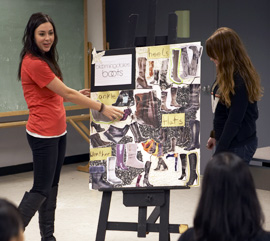
11. Be a costume designer/set designer - Have students consider what it would be like to stage a production of the story. Using magazines, newspapers, advertisements, etc., students create fashion boards to represent how they would dress the main characters and/or set boards to detail how they would set the stage including backdrops, lighting, props, etc. Write-ups should include why these visual choices were made and how they relate to the text using concrete examples.

12. Create a character diary - Students choose a character from the book and compose a diary or journal with a set number of entries discussing important events in the story from the character's point of view.


So, there you have it. Twenty ideas for moving beyond the standard 'ho-hum' book assignments and engaging your students' creative and critical minds in book interactions. Allow your students the chance to stretch their mental muscles. The results will most definitely be surprising, and quite often wonderful!

Wednesday, August 8, 2012

5 Resources for Integrating Music Across the Curriculum

Why Should I Use Music in My Classroom?

"We know an age more vividly through its music than through its historians."
~ Rosanne Ambrose-Brown

I have never met anyone whose life has not been influenced by music in some way. Music sets the stage for our lives; it has the ability to trigger memories and manipulate moods. Music can stimulate our creativity and increase the connections in our neural network.

Those of us who grew up with School House Rock can attest to the power of music to infiltrate the memory whether you want it to or not. I dare you not to finish this: “Conjunction Junction . . .” How about this one: “I’m just a Bill. . .”

If for some reason you have never heard of School House Rock or if you just want to take a trip down memory lane, here is a video for your viewing pleasure.


The truth is, using music in the classroom can impact student learning in a number of ways. Music can be used to:

  • create a positive learning environment
  • establish the necessary mood or atmosphere
  • re-energize tedious learning activities (like review, vocabulary, and drills)
  • focus attention and improve memory retention
  • facilitate multi-sensory learning and address multiple intelligences
  • provide inspiration, motivation, and creative fuel for imagination
  •  build rapport between students and teachers and among the students themselves


When a child learns by experience that music forges direct links between self and world, self-expression becomes more fluent; the music helps interpret "who I am." - Growing up Complete, the report of the National Commision on Music Education, 1990


Five Resources for Music Integration

  1. The Rock and Roll Hall of Fame - currently houses 52 lesson plans using rock and roll to teach History, English Language and Literature, Economics,Social Science, Psychology, and Government.
  2. Science in School - "Using music in the science classroom" by Caroline Molyneux - extremely interesting article from science teacher Caroline Molyneux outlining her strategy of using music in her classroom to begin class and to facilitate memory retention in her students. 
  3. Flocabulary - Educational Hip-Hop - subscription resource with videos covering English (both literature and vocabulary), math, science, social studies, and current events. Individual teacher rate is $5-7/month (depending on whether or not you want the current event videos each week) or $63/year (get 3 months free). They also offer free videos on their site and on YouTube as well, including this one for Macbeth that I used with my sophomores.


4.  "Interactive Music Strategies for the Academic Curriculum" by Michelle Lazar - Practical ideas for integrating music into the curriculum.

5. EdApps.ca - "14 Ways to Use GarageBand in the Classroom" - Uses include ways to increase technology in music classes, as well as physical education and across the humanities.