True education addresses the social, emotional, and academic growth of the kids in its care. True educators lead the way. Thinking "outside the box" is the way to make it happen. We must strive to not only engage our students, but also to involve them in the direction of their lives and their educations.
We make lots of jokes about the importance of good grammar. Some of us are grammar Nazis who lurk on Facebook and other online forums ready to correct the "great unwashed masses" when they forget an apostrophe or misuse to, too, or two. Others are the type telling these seemingly obsessive protectors of the English language to "lighten up" because it's "just the internet after all" and "no one can expect everyone to be perfect all the time." Whether you fall into one of these groups or somewhere in between, the simple truth is good grammar is important.
If you
ask the average person on the street whether or not using good grammar is
important, you may be surprised at the variety of responses you will receive.
It seems the debate over the significance of prescriptive English grammar is
alive, and sometimes slightly aggressive, in the court of public opinion. My
personal belief is that the study and mastery of proper English grammar is not
only necessary, but also imperative. Our students’ overall success beyond the
academic world is dependent upon their ability to write and speak clearly and
professionally – an impossible task without at least some degree of working
knowledge involving grammar. My ideology regarding English grammar has
developed not simply because I am a teacher of English, but also due to the
fact that I have spent so much of my life performing a variety of jobs in the
private sector including many years spent as a hiring manager for several
different businesses.
In
this digital age of texts, tweets, instant messages, and emails, some will
argue the use of prescriptive grammar has become out-dated or even archaic;
however, when it comes to the professional world nothing could be farther from
the truth. Kyle Weins, CEO of iFixit and Dozuki, administers grammar tests to
every applicant for every position in his companies. Weins’ justification for
using this tool across the board is “grammar signifies more than just a
person’s ability to remember high school English. I’ve found that people who
make fewer mistakes on a grammar test also make fewer mistakes when they are
doing something completely unrelated to writing — like stocking shelves or
labeling parts” (2012). While Weins’ tactics may be slightly more militant than
those employed by other companies, the simple fact is more companies today are
including grammar and writing tasks in their application processes. These
businesses are also turning more potential employees away due to their
inability to successfully complete these activities.
Ultimately,
it doesn't matter how intelligent, capable, or qualified applicants may be, if
they are incapable of presenting themselves competently through their speech
and writing. For better or worse, using poor grammar portrays a person as
careless, lazy, or at worst ignorant. None of these qualities are highly sought
after by any business owner. In this age of electronic applications, contact
with potential employers can be limited to written artifacts like cover
letters, resumes, and personal websites or social media profiles. Our written
words represent our first, and sometimes only, impression. The ability to use
proper grammar signifies not only credibility and professionalism, but also
commands a degree of immediate respect from those reading and reviewing the
materials presented. This in itself is more than enough reason to ensure our
students learn and master grammar.
Now that I've gotten that out of my system, I will leave you with a bit of fun. Weird Al's take on grammar is entertaining and timely - as we ready ourselves to return to school and decide exactly where grammar fits in our classrooms no matter what subjects or grade levels we teach.
While I think most people in the United States today believe the public
education system as it now stands is 'broken,' there is a great disparity in developing
a comprehensible definition of the problem and even more inconsistency and
confusion in cultivating a plan to ‘fix’ the problem.
Sir Ken Robinson is is an English
author, speaker, and international advisor on education in the arts to
government, non-profits, education, and arts bodies. His theories on
educational reform revolve around placing more importance on the arts,
promoting student creativity, and solidly acknowledging and supporting multiple
intelligences in instruction and learning.
According to Robinson, the model
of the educational system today is utterly out-of-date. Our students are being
groomed to be compliant factory workers in a society that no longer supports
these types of occupations. As students’ creative minds are educated out of
them, we are turning out a stunted workforce of citizens who are unable to
think creatively or critically.
This video, from RSA Animate, details Robinson's thoughts on what is wrong with education today.
Changing the paradigm of
education today is the first step in meaningful reform.
Robinson is unquestionably a wonderful motivational speaker in the world of education. In this video, recorded at the TED conference in 2010, he discusses moving away from standardized education and developing a personalized curriculum that supports the creation of an environment where children's natural talents can grow and flourish. He advocates, not reform, not evolution, but rather revolution in the world of education.
Ultimately, I find Sir Ken Robinson to be highly motivational and inspirational. He has a way with words and tells some of the greatest anecdotes related to children's education and learning that I have ever heard.
After listening to his speeches and reading many articles he has authored, I am moved to be a part of the solution rather than a part of the problem. I really don't know how anyone in the world of education who considers themselves a progressive thinker could not be influenced by the message this man is sending out.
My only criticism is this - while Robinson is absolutely fantastic at the conveyance of 'big ideas' for educational reformation, or transformation, he doesn't really offer any feasible ideas for making these types of changes a reality. Listening to him provokes a response in those who listen to him, but now what do we do? The wheels of change turn slowly in education. What can we do now to make a difference? What little changes can we make in our classrooms to promote creativity and allow our students to develop their personal talents?
I would like to think I do my part for the cause. I believe stressing cross-curricular integration (especially music and the arts), regularly using kinesthetic activities, and stressing the equal importance of the creative and critical mind to academic success in the classroom are all immediate actions that can be taken to support Robinson's 'big ideas.'
Knowing change is needed and taking steps to facilitate change are two very separate things. Ideas without actions are not worth the air it takes to say them or the time it takes to write them. So, if you believe in the kind of change being called for by Robinson, how exactly do we make that happen?
As a new school year begins, my thoughts have turned to one of the most favored of educational catch-phrases - "to create a safe environment." This keystone for many a school mission statement and educational philosophy is thrown around quite often. I have no doubt that for the majority of those working in and around education, this goal is extremely important, but just how successful are we at creating and maintaining this "safe haven" for our students?
5.0% of students did not go to school on one or more days in the 30 days preceding the survey because they felt unsafe at school or on their way to or from school.
7.7% of students reported being threatened or injured with a weapon on school property one or more times in the 12 months preceding the survey.
19.9% of students reported being bullied on school property in the 12 months preceding the survey; the prevalence was higher among females (21.2%) than males (18.7%).
11.1% of students reported being in a physical fight on school property in the 12 months preceding the survey.
What is bullying?
If we are going to address the problem of bullying behaviors, it is important to have a clear definition of exactly what this means.
Bullying behavior is any physical, verbal, or psychological action that is done by one person or a group of people to systematically intimidate another. These behaviors include, but are not limited to:
Hitting, pushing, or slapping
Name-calling or teasing
Spreading rumors or social exclusion
Back in the day, most of these behaviors were dismissed as "kids just being kids." Thankfully, this is no longer the case. Unfortunately, it has taken a great number of highly-publicized tragedies involving children who have been bullied to finally begin to dispel this dangerous axiom.
I have worked with kids in a wide variety of public educational environments - urban, suburban, and rural. The one thing I can guarantee you is this - it doesn't matter how well-behaved your student body is or how close-knit your school community tries to be, there are bullying behaviors going on right now in your halls, in your classrooms, and in your common areas. And it is up to you to stop it.
It is the responsibility of every adult working with children today to protect them. Principals, secretaries, counselors, teachers, librarians, custodians, cooks, and all other faculty and support staff are equally responsible for the prevention of bullying behaviors in schools.
Steps to Take
#1 DOCUMENT EVERYTHING. The number one rule for everything related to education is the number one rule for dealing with bullying as well. Take note of day, time, parties involved, behaviors observed, and any actions taken. This not only serves as a written record for your own and your administration's use, but when used properly can also be an invaluable tool for recognizing and tracking patterns in behavior over time and across environments for both the bullies and the bullied.
In Your Classroom
#2SET CLEAR EXPECTATIONS FROM THE BEGINNING - Talk to your students about what it means to be respectful. Be firm about a zero-tolerance policy for bullying behaviors. Discuss what this means and talk about consequences. Whether the behavior is a single incident due to someone having a bad day or an ongoing issue between students, taking a resolute position from the first day and treating every disrespectful situation with consequences sets the behavior expectations in your room high and keeps them high.
#3 KNOW YOUR STUDENTS - Watch them in the hall, pay attention to who they hang out with or if they are mostly alone, get to know their personality and normal demeanor - you will be able to tell if something has changed or if something is wrong.
#4 PAY ATTENTION - Be aware of what is going on around you during passing times and when students are entering or leaving your room. Watch their posture and disposition and listen to what they are talking about. These are the best opportunities to identify any potential problems or issues with or between your students.
#5 KEEP YOUR CLASSROOM CLOSED TO THE GENERAL POPULATION - DO NOT allow students who are not in your class into your classroom during passing times or prior to class. Just set this as a general policy, even for students you may have during other periods. Require students to keep their visiting out in the hallway and make sure your students know when your class is open for everyone (before school, during planning periods or advisory, etc.).
This is one I had to learn the hard way after having a fight break out in my room between one of my students and the boyfriend of another student in my class during a passing period. Lesson learned! The only students allowed in my room during class times are the students getting ready for that class.
#6 DEAL WITH SITUATIONS IMMEDIATELY AND AS DISCRETELY AS POSSIBLE - You don't want to give the bully any more peer attention than is absolutely necessary, but you want to show the victim that you see what is happening. You want to send a direct message to everyone in the classroom - this behavior will NOT be tolerated.
#7 TAILOR YOUR IMMEDIATE RESPONSE TO THE SITUATION - As with everything in life, each situation is going to be different. One response does not fit all. It is dependent upon the kids involved, the nature of the behavior, and what is happening in the room at the time. Based on these factors, I have removed the bully, allowed the victim to leave the room momentarily, called on one or the other to help with a demonstration or run an errand, and even just used proximity control to stop the bullying behavior until I could get the entire class working independently. This is where #3 comes in handy again. It is much easier to decide on the least disruptive response when you know your students' personalities.
#8 FOLLOW-UP WITH THE STUDENT BEING BULLIED, ASAP AND OVER TIME - Meet with the student being bullied privately either directly after class, during his/her next free period, or after school. Talk to them about what happened and let them know that you are there to help in any way you can whether it is in your classroom or elsewhere.
Be sure to check-in with the student from time to time just to make sure everything is going okay.
#9 FOLLOW-UP WITH THE BULLIES PRIVATELY - For a single student, speak to them from time to time just as a reminder that you are keeping an eye on them and their behavior. If you are dealing with a group, speak to the members individually. I have personally found the best tactic in this situation to be starting with the followers and saving the leader for last. Leaders of groups that bully draw most of their power from the followers. If you can sever some of this support, then you can better diffuse further incidents of bullying.
#10 DEVISE A LONG-TERM PLAN, IF NECESSARY - There are times when unacceptable bullying behaviors are just a result of someone having a bad day. While these should be dealt with in the same fashion as on-going problems when they occur, most often a stern reminder of appropriate and respectful conduct will set the situation right. Other times, moving around seating and diligent observation may be in order. Of course, this is something each teacher has to determine for themselves. There are no quick or easy answers to this one. Sometimes you just have to play it by ear, and if your first plan doesn't work, then try another.
While you can make the greatest impact against bullying behaviors in your own classroom, you can influence the behavior of students in the general population as well.
In common areas, hallways, etc.
#11 LET YOUR REPUTATION PRECEDE YOU - Kids talk. If you are a teacher who is vocal about your intolerance for bullying behaviors AND you follow through by taking action against such conduct, students will respond to this when you are physically present in an area. Be a strong visual presence in the halls during passing times and when on lunch or bus duty. Make eye contact with students and speak to them as they pass you. Let them know that you are paying attention to what they are doing and how they are behaving.
#12 GET TO KNOW AS MANY STUDENTS AS YOU CAN - This can be extremely difficult in large schools, but it really serves the same purpose as getting to know the kids in your classroom. the more kids you know and the more who know you, the better.
#13 DIFFUSE A POTENTIALLY BAD SITUATION WHEN YOU SEE IT - Pull one of the students out of the altercation by engaging them in a conversation unrelated to the behavior. This is where knowing the students comes in handy - especially knowing what students are involved in teams, clubs or organizations in the school OR those who have gifts, talents, or interests in specific activities.
Don't think for a minute that they don't realize what you are doing. They do. But in environments involving large peer groups, this tactic will stop the behavior without calling anyone out or publicly embarrassing them. Kids are smart - most will get the unspoken message, "I see you, I'm watching, and I don't approve."
#14 INTERVENE FURTHER, IF NECESSARY - Your position requires you to be responsible for the kids in your care whether they are in your classes or not. If you witness any physical or extreme verbal abuse happening - STOP IT. Follow your particular school's procedures for handling the students. Get help from other faculty or staff if needed. Just DO NOT IGNORE what is happening (and yes, I've seen this happen).
#15 FOLLOW-UP WITH THE INCIDENT - If you have had to intervene in a bullying situation involving students other than those you see on a regular basis, don't just assume everything has been taken care of once the referrals are over. Follow-up with the administration, the counselors, and the students involved, if possible. This practice not only shows that you follow through on what you've started, but also helps build that reputation we discussed in #11.
While most of these steps may seem like common sense, I can assure you I have seen bullying behaviors left unchecked as a student, as a professional, and as a parent. If you believe that as a teacher, your only job is to teach, then I would respectfully suggest that you seriously consider changing careers ASAP lest you become a part of the problem rather than a part of the solution.
Traditional book reports should be a thing of the past. I mean, do you really want to read 30-125 recaps of the same book? (YAWN!) Well, guess what, your students don't want to write them either. They are boring and tedious. And most importantly, they really don't measure the comprehension of a text or confirm that they have even read the text assigned. All these reports prove is that your students are capable of using SparkNotes or Wikipedia with a certain amount of expertise.
Don't just have your students report on what they are reading. Encourage them to interact with it instead.
Technology-Enhanced Book Interactions
With all the free technology available today, why not give students some interesting choices to use in their textual interpretation?
1. Create a book trailer - Just like a movie trailer, a book trailer tells the story in a way that touches on the highlights, but sells the audience on wanting to experience it. There are a number of great resources students can use, including Animoto for Education, PhotoPeach, and Go!Animate. Richard Byrne over at Free Technology for Teachers offer a Free Guide to Making Videos on the Web, in case you need some assistance. And if your looking for a professional example, here is the book trailer for Ransom Riggs' Miss Peregrine's Home for Peculiar Children.
2. Create a podcast - This could take the form of a book review or a scripted interview with either the author of the book or one of the reader's favorite characters. Students could choose to use audio only or take it a step further through the use of video, props, and costumes. PodBean offers free podcast hosting. Free blogging sites like Blogger and WordPress also support podcasting. Additionally, I know a number of educators who use class YouTube channels to support videos created in their classrooms (of course, this would depend upon your school's specific regulations regarding YouTube.)
3. Create an interactive 3-D pop-up book - ZooBurst is a digital storytelling tool that lets anyone easily create his or her own 3D pop-up books. ZooBurst books “live” online and can be experienced on your desktop or laptop computer, or on your iPad via the free ZooBurst mobile app. Authors can arrange characters and props within a 3D world that can be customized using uploaded artwork or items found in a built-in database of over 10,000 free images and materials. This is a very cool FREE program!
4. Create a multi-media collage - Glogster is a FREE service that allows users to create one-page media-mash-ups using images, audio, video, text, and more. Glogster EDU is the same platform designed specifically for use in the classroom with stricter privacy measures in place - of course, that also makes it a pay site (Single Teacher License: up to 50 accounts for $29.95/year, up to 200 accounts for $99/year or $11.95/month. Multi-license for individual schools or entire districts: up to 2500 accounts for $2/account/year, from 2500 accounts for $1/account/year). View an example for Tolkien's The Hobbithere or one detailing the Freedom Riders, here.
5. Create an interactive timeline - Capzles is a FREE resource to create interactive timelines using images, video, audio, and text. Just to give you some ideas, view an example covering the historical timeline for To Kill A Mockingbird here or one detailing the Women of WWII, here. I think this tool could be used to make a very interesting small group or whole class project.
6. Create an animated or stop-motion video - Stop Motion Animator and Helium Frog are both FREE resources for creating stop-motion projects. Kevin Hodgson has an absolutely fantastic site, Making Stopmotion Movies, that will walk you through the entire process!
7. Create literature maps - Google Lit Tripsfounded by Jerome Burg and Terence Cavenaugh utilizes Google Earth to more
deeply explore some of the greatest and most important literary road trips ever
written. Lit trips explored in the 9-12 level include:
the expedition taken by Christopher Johnson McCandless in Jon
Krakaurer's Into the Wild; the Joad family's emotional relocation in
Steinbeck's The Grapes of Wrath; and Elie Wiesel's horrific journey
through the Nazi concentration camps of WWII brought to light in his
book Night. Using the site requires the Google Earth application,
QuickTime player, an internet browser (Firefox, Safari, or at least Internet
Explorer 7), and internet access. SMART board technology or an LCD projector are
recommended. Additionally, the site features many student-generated lit trips
and tutorials on using Google Earth to create virtual tours which could be
adapted to class or group projects at any grade level.
8. Create a comic strip - Students can either choose to re-create a specific scene from the text or do a synopsis of the story as a whole. In either case, students should include important lines, quotes, and thoughts from the text. ReadWriteThink offers a cool interactive tool in their Comic Creator. Additionally, Pixton and Strip Generator use a basic drag-and-drop interface that is easy to use and requires no artistic ability whatsoever. (*This activity can also be done sans technology. See #10 below.)
Creative and Critical Thinking Book Interactions (No Tech Necessary)
What if your students just don't have enough access to technology to make assignments like these feasible? (It does happen in some communities, even in this day and age.) Well, there are still a multitude of ideas out there for helping your kids stretch their creative muscles and engage their critical thinking skills that involve no technology at all. (Of course, any of these ideas could also be combined with the tech-enhanced interactions above.)
1. What if? - Have students identify a turning point in the book's plot, then switch it up. What would have happened if the series of events didn't happen that way? What if Romeo had received the letter? What if Simon had not been killed before he could deliver his message about The Beast? ReadWriteThink offers an excellent lesson plan, Happily Ever After?, that is designed to be used with tragedies and offers both resources and student presentation ideas.
2. Create a character - A great exercise in creativity, characterization, setting, and voice. Students create a character that would fit into the world of their novel. They write up a character sketch and then construct a scene in which their new character interacts with one or more of the main characters of the story. The character and the interaction must remain true to the setting and voice of the original author. (I used this exercise with great success with a freshmen lit class working on The Adventures of Huckleberry Finn.)
3. Change the setting - Have students take a favorite scene or chapter from the text and re-write it in a different setting. How would Macbeth look and sound in a modern, urban setting? What about Great Expectations in the American Old West?
4. Create a new book cover or "movie" poster - Go 'old school' with the images, having students either draw them or use images from magazines, newspapers, etc. Students also choose important quotes, create taglines, and provide a brief synopsis to "sell" the story to the potential audience.
5. Write a character resume - Students choose a character, consider what type of job the character would be seeking, and write a resume for that job. This exercise gives students the opportunity to think about the text in a different way and also exposes them to an authentic life skill (resume writing). It also allows students the flexibility of creativity. Resumes may be funny or serious as long as it reflects the true nature of the character. Some examples could be: Count Dracula applying for a position as a phlebotomist or Doctor Frankenstein searching for a job as a Principal Investigator in the field of biomedical research.
6. Create a word collage (AKA an 'old school' word cloud) - Have students write the title of the book in the center of a sheet of paper, then search through magazines and newspapers to find words, phrases, and sentences that either represent the book or explain something about the book. Students should concentrate on theme, setting, plot, and characters during this exercise. Requirements: a minimum of 50 words, phrases, and sentences, paper should be fully covered and provide the viewer with a strong visual impact that reveals a great deal about the story.
7. Create a novel soundtrack - Students will choose a minimum of 10 songs that represent the characters, setting, themes, motifs, plotline, etc. of the novel being studied. Liner notes should be completed for each song detailing the song information (title, artist, album, year of release, etc.), who or what the song represents, an explanation of why the song was chosen and how it is representative of an element of the story. (*This exercise could also be modified to creating a soundtrack for the students' choice of a single character in the narrative.)
8. Create a childhood - If you are studying a text with adult characters, have students choose a character and think about what they would have been like as a child. Students will tell the story of the character's childhood concentrating on aspects or interactions that could explain why the character's words and actions in the novel are what they are.
9. Create a character scrapbook - Students will consider the purpose of scrapbooking and what kinds of mementos they would place in their own scrapbooks. After choosing a character from the text, students will use magazines, newspapers, and their own imaginations to cut out and/or draw mementos that would be important to the character.
10. Create a comic strip - For the artistic students in your group, have them choose to re-create a scene in the book or a synopsis of the story as a whole using the popular graphic novel-style and using text bubbles to insert important lines, quotes, and thoughts from the text. ( *For a tech-enhanced version, see above.)
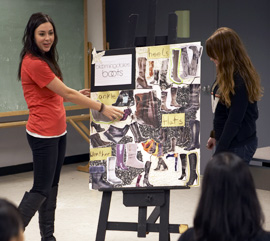
11. Be a costume designer/set designer - Have students consider what it would be like to stage a production of the story. Using magazines, newspapers, advertisements, etc., students create fashion boards to represent how they would dress the main characters and/or set boards to detail how they would set the stage including backdrops, lighting, props, etc. Write-ups should include why these visual choices were made and how they relate to the text using concrete examples.
12. Create a character diary - Students choose a character from the book and compose a diary or journal with a set number of entries discussing important events in the story from the character's point of view.
So, there you have it. Twenty ideas for moving beyond the standard 'ho-hum' book assignments and engaging your students' creative and critical minds in book interactions. Allow your students the chance to stretch their mental muscles. The results will most definitely be surprising, and quite often wonderful!
I loathe textbooks. I detest and despise them. Textbooks are bland and boring, and they read like a set of stereo instructions. They suck the joy out of learning and teaching. When I look at a textbook, I can almost hear the monotone droning of a lecture that will without a doubt put me to sleep. Literature textbooks are the worst! Full of excerpts (blech!) and poetry/short stories that are either unknown or uninspiring or both. They are edited to within an inch of their existence. Quite frankly, they suck.
When I entered my first classroom and took inventory of the text choices I
had inherited, I was less than enthusiastic. I found very few trade books
(which I actually love), two sets of literature text books, and a set of grammar texts
from the 1980’s. What could be worse, you might ask. Well, there were also not enough of any of these books for
each student to have one. So even if I had wanted to use them, my students
wouldn’t be able to reference them outside of the classroom because there was
only one set to be shared between four classes.
The fact is, it is extremely difficult to build excitement in your students, if
you are bored with and disengaged from your own class materials. So, I immediately made
the decision to chuck the texts and create my own. Working in Word, I compiled
materials, complete with illustrations, and put together my own texts. I also
made enough copies that all my students had their own to use wherever and
whenever they chose.
Over the course of a few weeks, I worked at night and over weekends to put
together a poetry anthology and a short story anthology for my sophomores and a
series of mythology anthologies for my seniors, including Norse, Egyptian,
Arthurian, and Modern Myth and Legend.
While the process is a little time-consuming, I assure you it is well worth the
effort involved. The materials you create will be more interesting to both you
and your students.
Although you can put these materials together with no more than MS Word and
Internet access, there are lots of great options available that both teachers
and students can use to create digital texts, if you know where to look. This is definitely a case of "I wish I knew then what I know now." So, please learn from my ignorance and check out some of these fantastic resources.
Resources for Creating, Curating, and Sharing Digital Textbooks
1. ePub in Classroom - The ePub format has become an industry standard for ebooks. You can easily
create ePub books with your students or you can create units and entire
textbooks for use with your courses. These resources will help you formulate
your ePub format resources.
2. ck-12 - Books available through this site are customizable. You can rearrange the chapters or even add, remove and edit content. Add bite-sized lessons to FlexBooks or assign to students for independent learning. Videos and multimedia simulations bring learning to life. Enable students to track their progress with instant feedback. Get assessments, answer keys and ideas for differentiated instruction.
3. Project Gutenberg - Offers over 40,000 free ebooks: choose among free epub books, free kindle books, download them or read them online. Perfect resource for creating anthologies.
4. Apple iBook Author - Available free on the Mac App Store. Allows for the use of galleries, video, interactive diagrams, 3D objects, and more.
5. LiveBinders - Free service for collecting, organizing, and presenting all manner of resources, including web pages, pdf files, graphics, and videos. I wish I had known about this site when I built my units last year! If you are wondering just how you could use this tool, check out this example for an Edgar Allan Poe unit or this one for Web 2.0 for Secondary Teachers. You can discover a wealth of information looking through other's binders and then synthesize them into your own.
6. Open Culture - 500 Free Online Courses from Top Universities, including some of the best free cultural and educational media available on the web.
7. Cybrary Man's Educational Websites - Created and curated by Jerry Blumengarten and including links for all grade levels and subject areas.
9. moodle - Free web application that allows educators to create online learning sites, AKA Virtual Learning Environments (VLEs).
10. Pinterest - An excellent content sharing site in which members "pin" images and videos to boards they create themselves. This site is quickly becoming a very valuable collecting tool for educators. It also offers a quickly growing community of "pinners." Here are 16 Ways Educators Use Pinterest from Stephanie Buck, just to give you some ideas.
With all these great ideas, the wheels are definitely turning! I am
currently working on two non-fiction anthologies, an American Folklore
compilation, and two thematic short story collections. I believe these
resources may be just the thing to update my previous collections and move my current projects to the next level.
So, if you are disenfranchised with the
materials you have available, do yourself and your students a favor and check
out some of these alternatives. I promise no one will be disappointed.
Entering the world of education with a background of working with kids in
the private sector my whole life, I have received many fantastic nuggets of
wisdom about teaching from veterans in the field. I have found these tips on
organization, ideas about classroom management, and tricks to ensure sanity
invaluable. However, there is one piece of advice I actually received from
several veterans that I have never been able to wrap my mind around – “don’t
get too involved with the students; it makes it easier to discipline them.” What?
What exactly does that mean?
Now, I suppose this could be a way to keep the line between teacher and
student unmistakably defined. When I pushed my helpful advisors for a more finite explanation, I never received the clarity I sought. This statement just seems
entirely too general in my eyes. I crave specificity.
Don’t gossip with your students – of course not, this is both
unprofessional and juvenile. Don’t hang out with your students casually – yeah,
I can understand that, after all we are not BFFs. Don’t go out and party with
your students – ok, now I’m just being facetious, but I have heard of it
happening, so I’ll throw it in here.
These statements are precise and could be helpful to people who have either
never been around kids or who are young and lack life experience or who just
have no common sense. But “don’t get too involved” – I didn’t understand it
then, and I don’t understand it now.
When I decided to go into education, my main reason was because I wanted to
be involved in the lives of children. I mean, what better way to help kids learn,
grow, and succeed than teaching, right? And it seems to me that the better you
know the kids, the better you can anticipate their needs, differentiate to
overcome their personal issues, and catch potential behavior problems before
discipline or intervention becomes necessary.
TMI – How much is too much?
As I have said before, I am new to the world of teaching. I have however
worked with kids in the private sector my whole life. For my “work kids” and
those I have tutored over the years, I have provided help with homework and
assistance with college entrance exams. I have been there to help my kids and
their families fill out FAFSA and college applications. I have given assistance
with job applications and resumes.
I have acted as a confidant and offered advice on relationships, parents,
school, jobs, drugs, alcohol, and even a couple of unplanned pregnancies. I have
always refused to be caught up in their adolescent dramas and have never failed to
quite bluntly call them out on drama for its own sake. I always approached them
as the young adults they were and treated them with honesty and respect. They never
failed to reciprocate.
I am still in touch with many of these kids and their families. And I still
refer to them as kids, even though the oldest among them have recently said
good-bye to their twenties and now have kids of their own. They are spread far
and wide – going to school, working, and living lives of their own. The thing
they have in common is this – when they come home, they look me up. They shoot
me an email when they can and keep me apprised of the big events in their lives
– graduations, marriages, births, new jobs, promotions. Their parents keep me
informed of their progress in school and in life whenever I run into them at
the grocery store. I have to say that the fact these kids still allow me to be
a part of their lives long after I’ve outgrown my ‘usefulness’ in their
day-to-day means the world to me.
Did I become too involved with these kids? Do I know too much about the
parts of their lives that were not directly related to my professional
association with them as a tutor or boss? I’m sure that everyone has an opinion
on how much information is too much, but I believe
the more important questions are these. Did I help these kids learn, grow, and
succeed? Yes, I believe I did. Did I make lasting connections with these kids? Definitely.
So, who gets to decide how much is too much? Aside from gross misconduct or
criminal behavior, I can say that I firmly believe the more information you
know about the kids you work with, the better you can meet their needs.
In the Classroom
Being present enough to pay attention to what my students are talking about
among themselves and taking the time to listen to them when they need someone
to talk to has allowed me not only to understand what is happening in their
day-to-day, but also to use that information to assist them in improving their
performance and experience in my room.
Has this resulted in some TMI overload situations at times? Yes, of course
it has, but without this involvement I would have never known:
·That freshmen girl in your class who has suddenly
developed a “diva from hell” attitude has just gotten her first ever boyfriend
and is feeling extremely self-conscious and nervous about exactly what that
means.
·That student who has been skipping class and refusing to
turn in work has parents who have recently split up; the mother left the state,
and the father is out of the country on business.
·That sophomore who went from falling asleep in class
every day to bouncing off the walls and picking fights with everyone sitting
around her has made the decision that she is old enough to determine whether or
not she needs to take her ADHD medication, and she chose no.
·That student who seems to have problems with social
interactions and quickly becomes combative with his peers just had his little
brother and sister taken out of the home by the state which left him all by
himself because he has aged-out of the system. He hasn’t seen them in over two
months.
·That student everyone calls lazy is working two jobs to
help his family keep a roof over their heads and food on their table.
Now, I’m interested to know exactly how not getting involved with my
students serves their best interests or my own? Do these situations influence
the way I deal with each of these students? Yes, it does. It doesn’t change my
expectations for these kids. I expect the same from them as I do all my
students. What it does change is my approach. And isn’t that what
individualized education is at its core? Adapting instruction to meet the needs
of all students?
If you are a veteran teacher, I have a sincere question for you. Have you
ever given this type of advice to a new teacher? What exactly did you mean by
it?